Before yarn becomes finished fabric, it goes through a series of preparation and processing stages.
Yarn winding is one of the important operations in textile manufacturing. It involves transferring yarn from one package to another in a form suitable for subsequent processing.
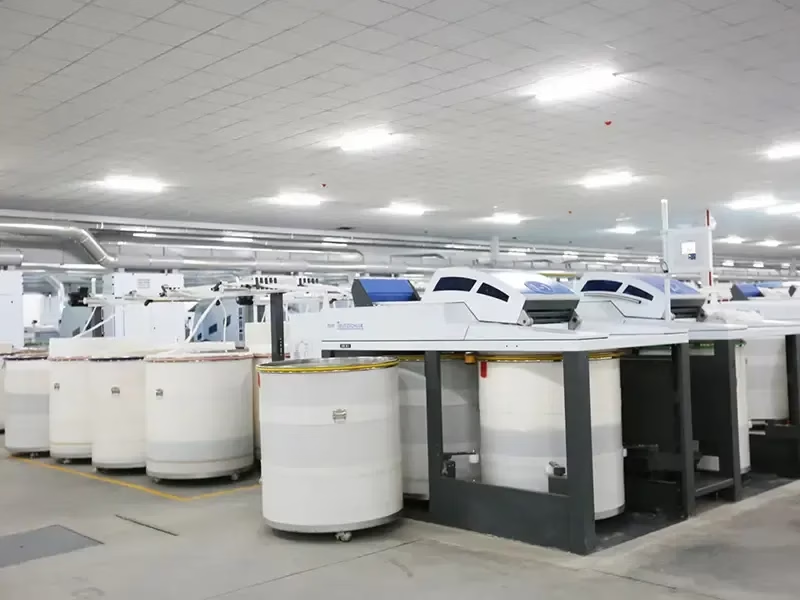
The workshop shown in this photo features yarn winding equipment used in the yarn preparation stage. It is important to distinguish this process from fabric weaving: winding prepares the yarn, while weaving or knitting is a separate stage in fabric production.
What Is Yarn Winding?
Yarn winding is the process of transferring yarn onto a package with a suitable shape, size, and winding structure.
Depending on the textile production requirements, yarn may need to be prepared for different downstream operations.
A properly prepared yarn package helps provide a more consistent supply of yarn during subsequent processing.
Why Is Yarn Preparation Important?
The condition of yarn before it enters the next production stage can influence how smoothly the process runs.
Several factors are worth considering:
1. Yarn Tension
Appropriate winding tension helps maintain a suitable package structure. Excessive or inconsistent tension may affect yarn handling during subsequent processing.
2. Package Uniformity
A well-formed yarn package supports stable unwinding. This is important when yarn is supplied continuously to downstream textile machinery.
3. Yarn Surface Condition
Dust, damaged yarn, and other visible irregularities should be monitored during yarn handling. Keeping the working area and equipment properly maintained helps reduce potential contamination risks.
4. Preparation for Further Processing
Different fabrics require different yarn characteristics and production arrangements. Yarn preparation helps make the material suitable for the next manufacturing operation.
From Yarn Preparation to Finished Fabric
The production of textile materials involves multiple stages, and each stage has its own requirements.
For example, tulle fabric is known for its lightweight, open mesh structure. Lace fabric features decorative patterns and different construction methods. Embroidery fabric involves decorative stitching, while sequin fabric incorporates decorative elements into its design.
Although these materials have different characteristics, yarn selection and preparation are important considerations in textile manufacturing.
A Closer Look at Textile Manufacturing
We believe that understanding the processes behind fabric production helps customers make more informed sourcing decisions.
This workshop photo offers a closer look at one part of the textile manufacturing process: yarn winding and preparation.
For buyers interested in textile production, knowing how raw materials are handled before fabric formation provides useful context when evaluating suppliers and discussing product requirements.